Higher corn yields through spading: results from practical research
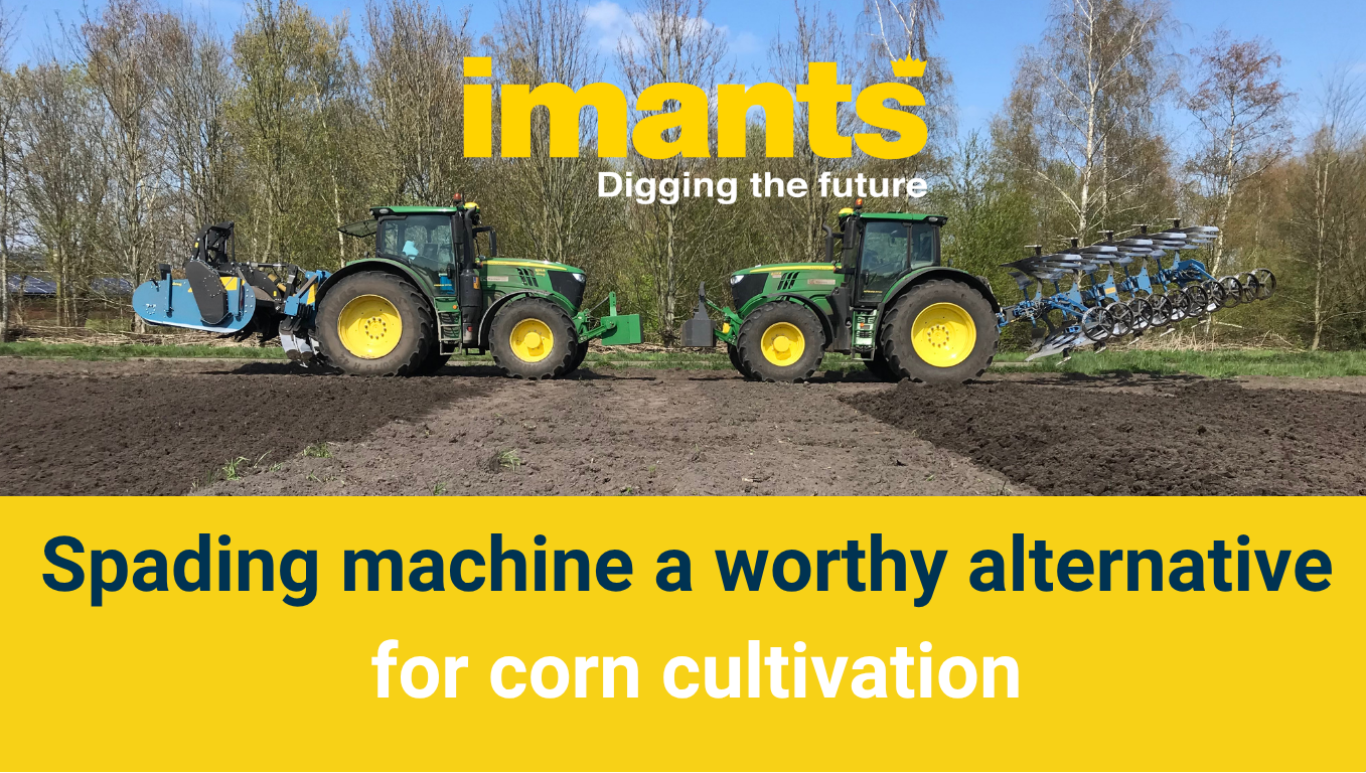
A multi-year study by the independent consulting firm Groeikracht shows that spading according to the Imants method is a worthy alternative to plowing in corn cultivation. In many cases, it even results in higher starch yields.
Spading vs. Plowing: Advantages of spading for soil quality
Spading has a number of advantages over plowing. For example, no plow pan forms under the spaded layer, which means that root growth is not inhibited. Organic material such as manure, crop residues or cover crops is reduced in size and mixed into the biologically active soil layer, and the soil temperature is largely maintained.
Imants spading machines: Optimal mixing of soil and organic material
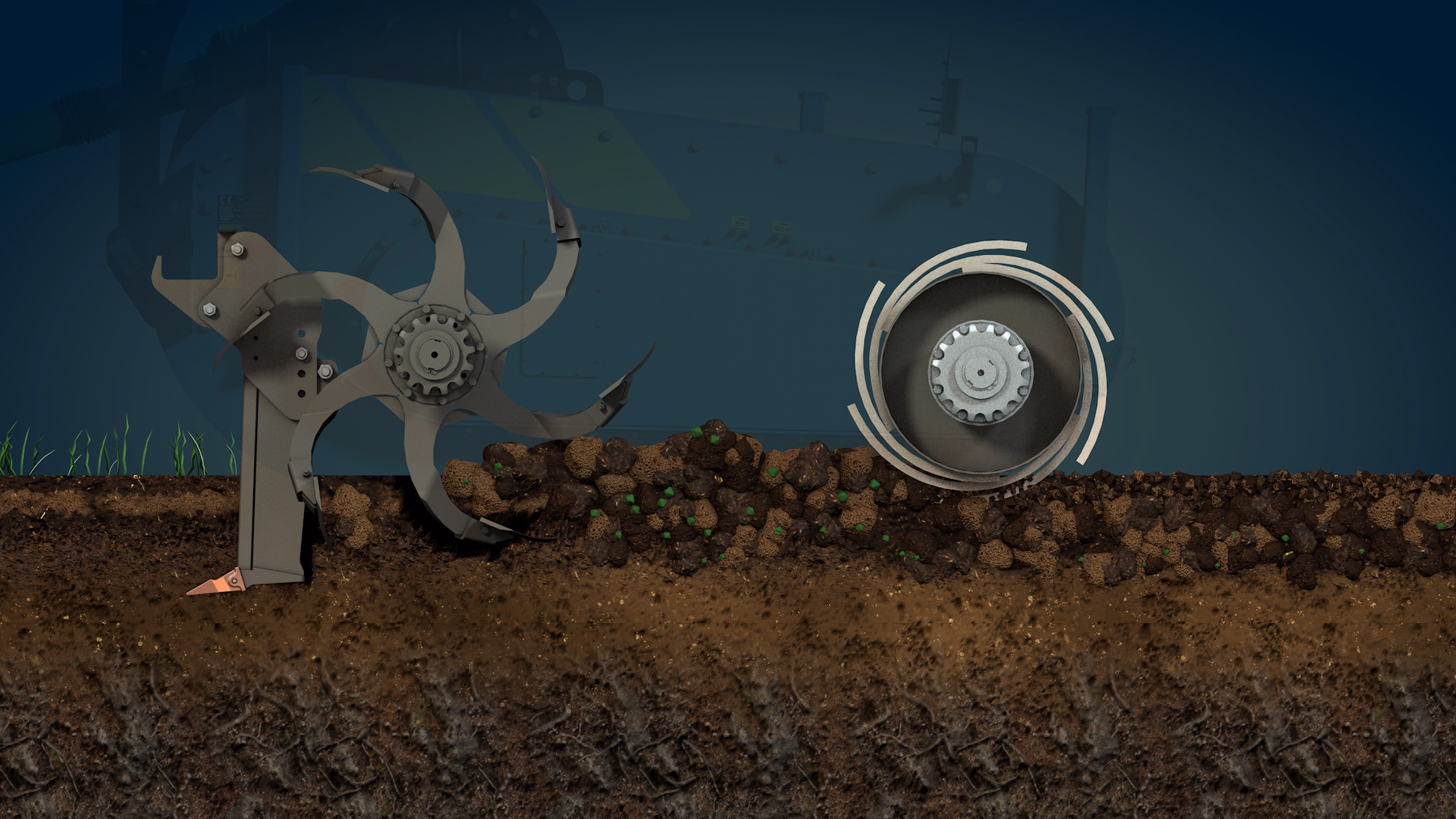
Imants spading machines are equipped with left and right spading blades, which are evenly distributed over the spading disc. This ensures optimal mixing of soil and organic material. Imants has also ensured that there is plenty of space in the machine, so that even with a lot of organic material, there is no clogging.
Even seedbed with driven harrow roller
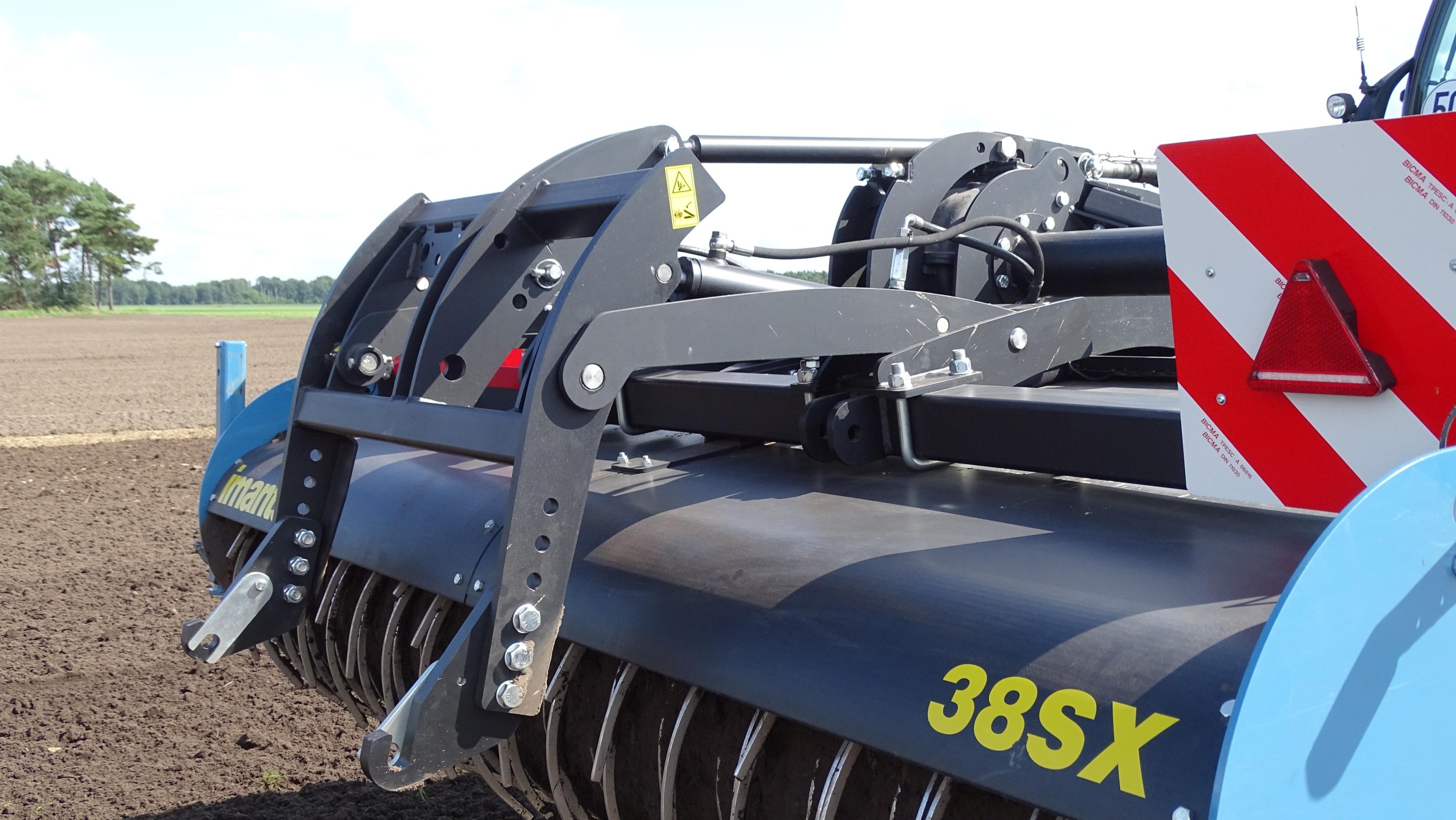
The manufacturer also paid a lot of attention to the driven harrow roller. Not only does it leave an even seedbed, but its specific diameter allows the machine to run smoothly on the roller, so that uneven ground does not affect the spading. For corn cultivation, which needs heat to germinate, this is a major advantage over plowing.
Groeikracht BV conducts independent research in the field
In 2018, 2019, and 2021, Groeikracht BV conducted its own research into the Grondig Boeren met Maïs Brabant (Thorough Farming with Corn in Brabant (the Netherlands)) project. By using machines from the field and repeating strips, the tests were kept as close to real-life conditions as possible.
Comparison between Imants spading machine and Lemken plow with subsoilers
In order to eliminate as many external influences as possible, the Imants spading machine was compared with the same plow, a Lemken 5-furrow plow with subsoilers and equipped with a Flex-pack packer. Various penetrometer readings showed that the spading machine with subsoiler tines loosened the soil deeper than the plow with subsoilers.
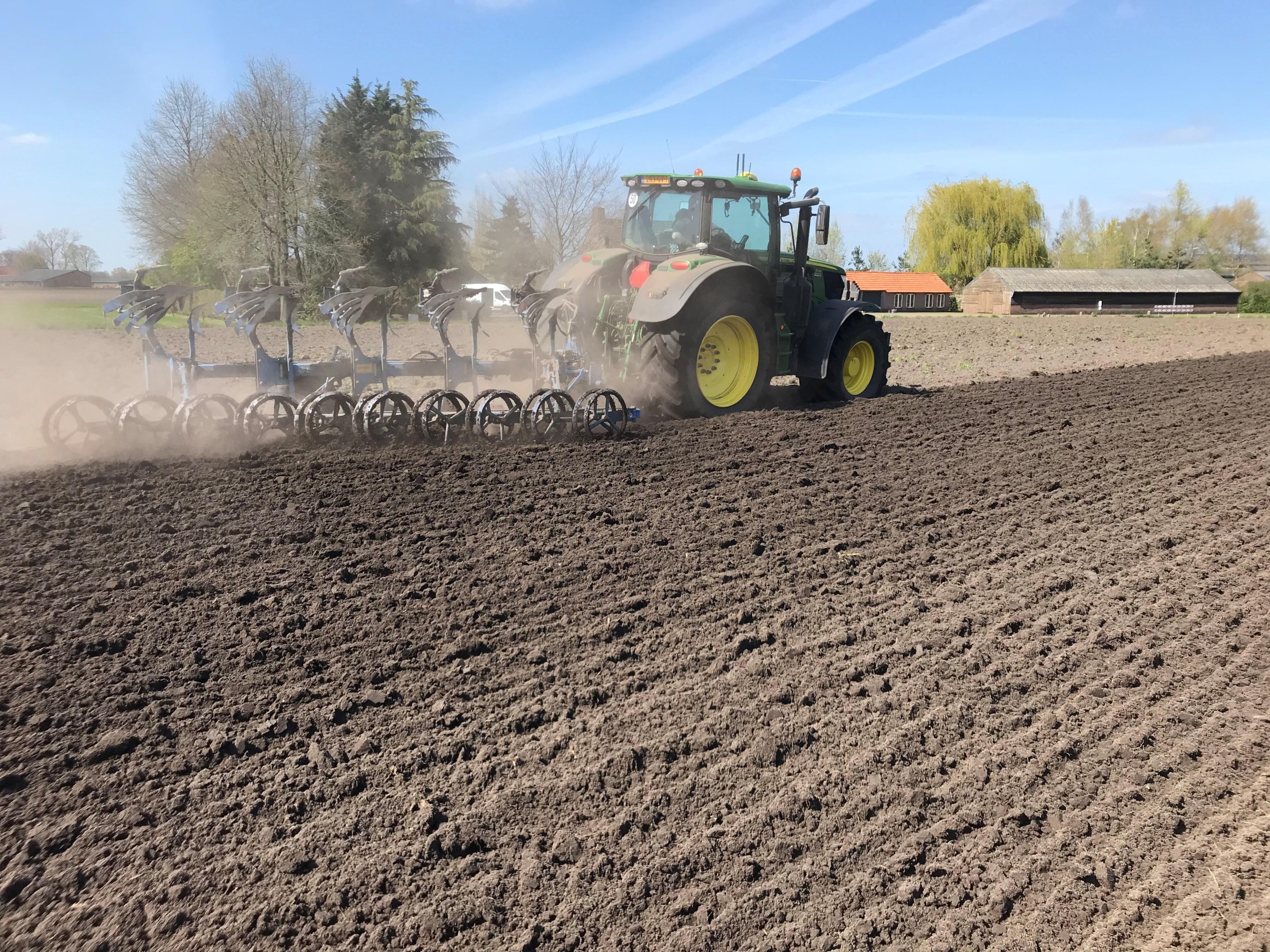
Results of the study on silage maize on different soil types
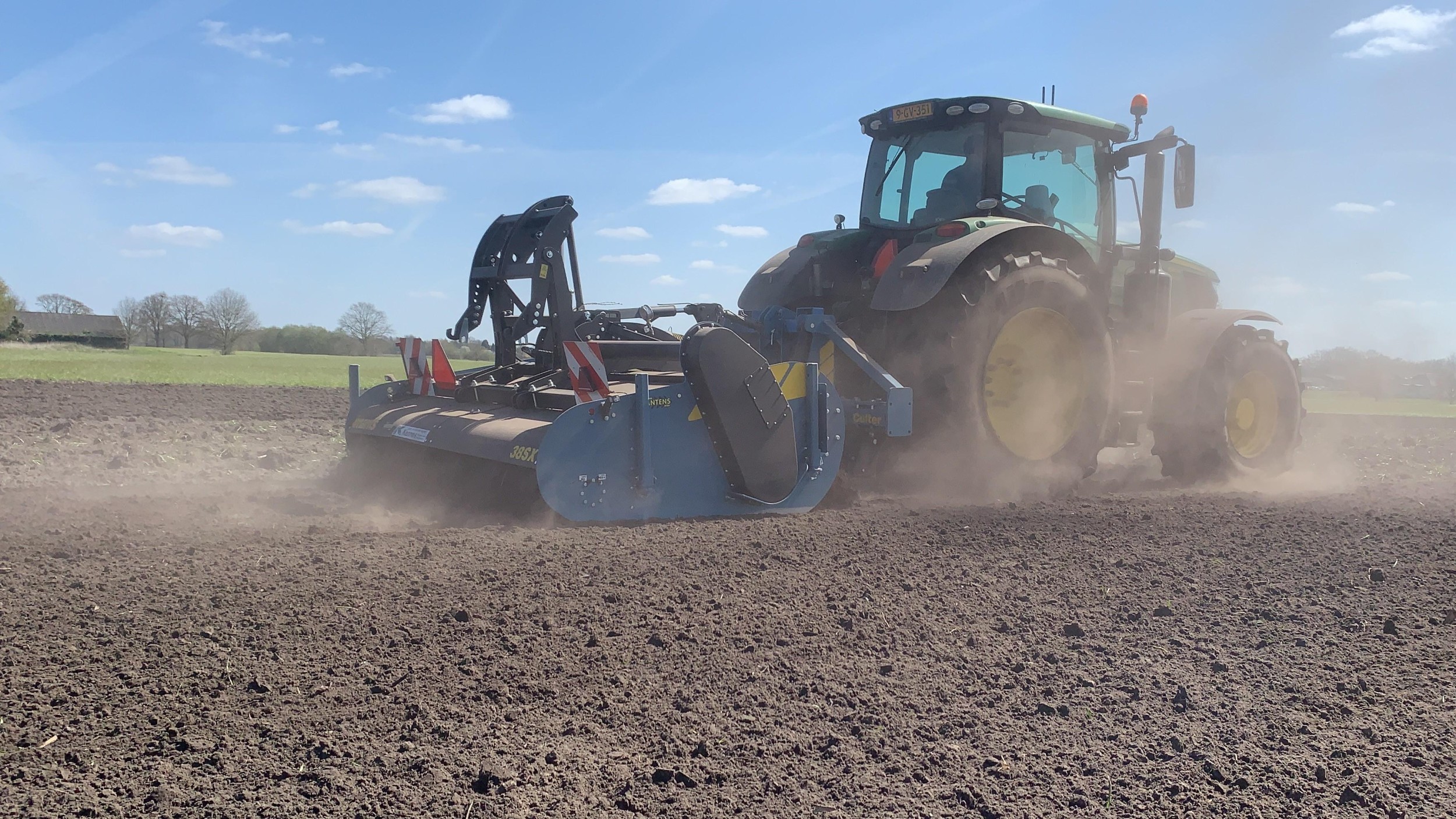
The trials were always conducted on silage maize on both light sandy soils and loamy sandy soils. The research looked at the reduction and digestion of the catch crop, the results of primary cultivation, weed pressure and storage, emergence counts, harvest measurements, and feed value determination based on multiple samples. The results were then compared using analytical software.
Results of three years of our own field trials and collaboration with Grondig Boeren met Maïs Brabant
The results of three years of our own field trials and collaboration with the Grondig Boeren met Maïs Brabant project show that there are differences between plowing and spading soil for silage maize cultivation.
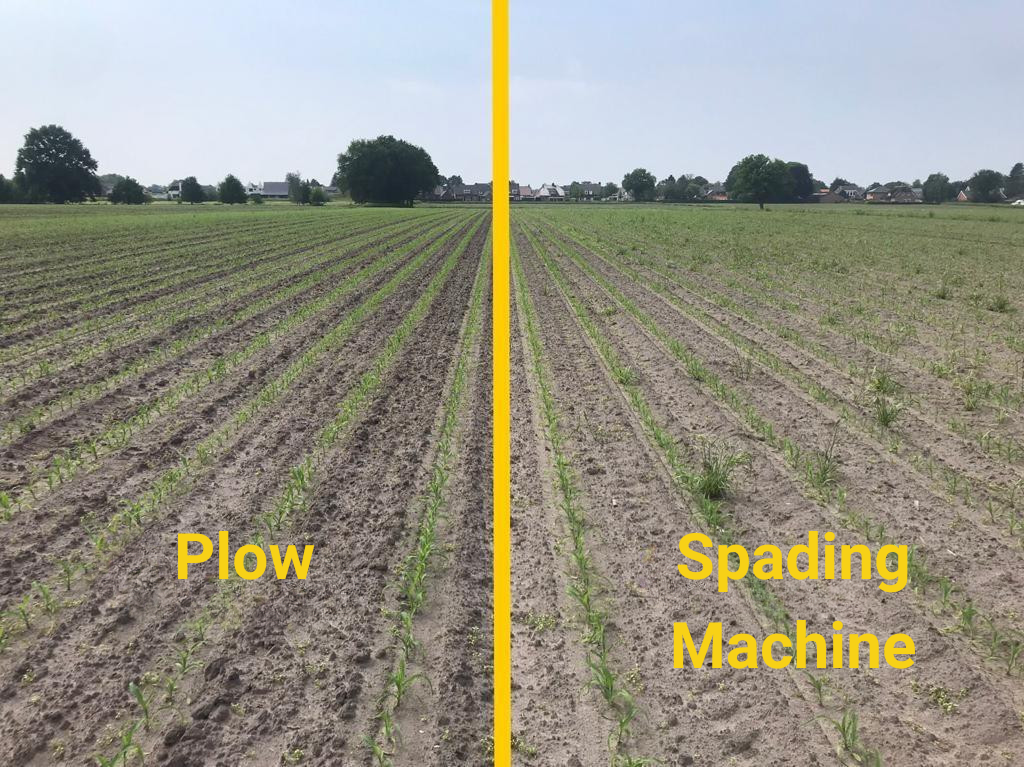
Small differences in strict crop yield between plowing and spading
If only the strict crop yield is considered, the differences between plowing and spading are small.
Higher starch yields with spading compared to plowing
However, a closer look at the results shows that starch yields are higher with spading compared to plowing. Silage maize is an energy crop grown for its starch. The results over three years showed higher starch yields on dry, normal, and loamy soils (see table below, where results in capital letters are significant and will therefore also occur in a repeated trial). The average additional starch yield was 3.3% per hectare for spading compared to plowing. On dry sandy soil, corn on spaded soil achieved an additional yield in dry matter (DM) of up to 7.8%.
Additional dry matter (DM) yield of up to 7.8% for corn on dry, spudded sandy soil compared to plowed dry sandy soil
On normal sandy soil, corn on spudded soil achieved an additional starch yield of 7.1%. This additional yield can be explained by a number of characteristics of the spading machine. For example, the spading machine with a powered rake roller lays the topsoil more firmly than the plow. This retains more moisture. Dry soil warms up faster, which ensures faster germination, while the moisture retained in the topsoil ensures that the young plants' moisture requirements are met. The plow leaves the topsoil looser, allowing a lot of moisture to escape but also allowing more (warm) air to enter.
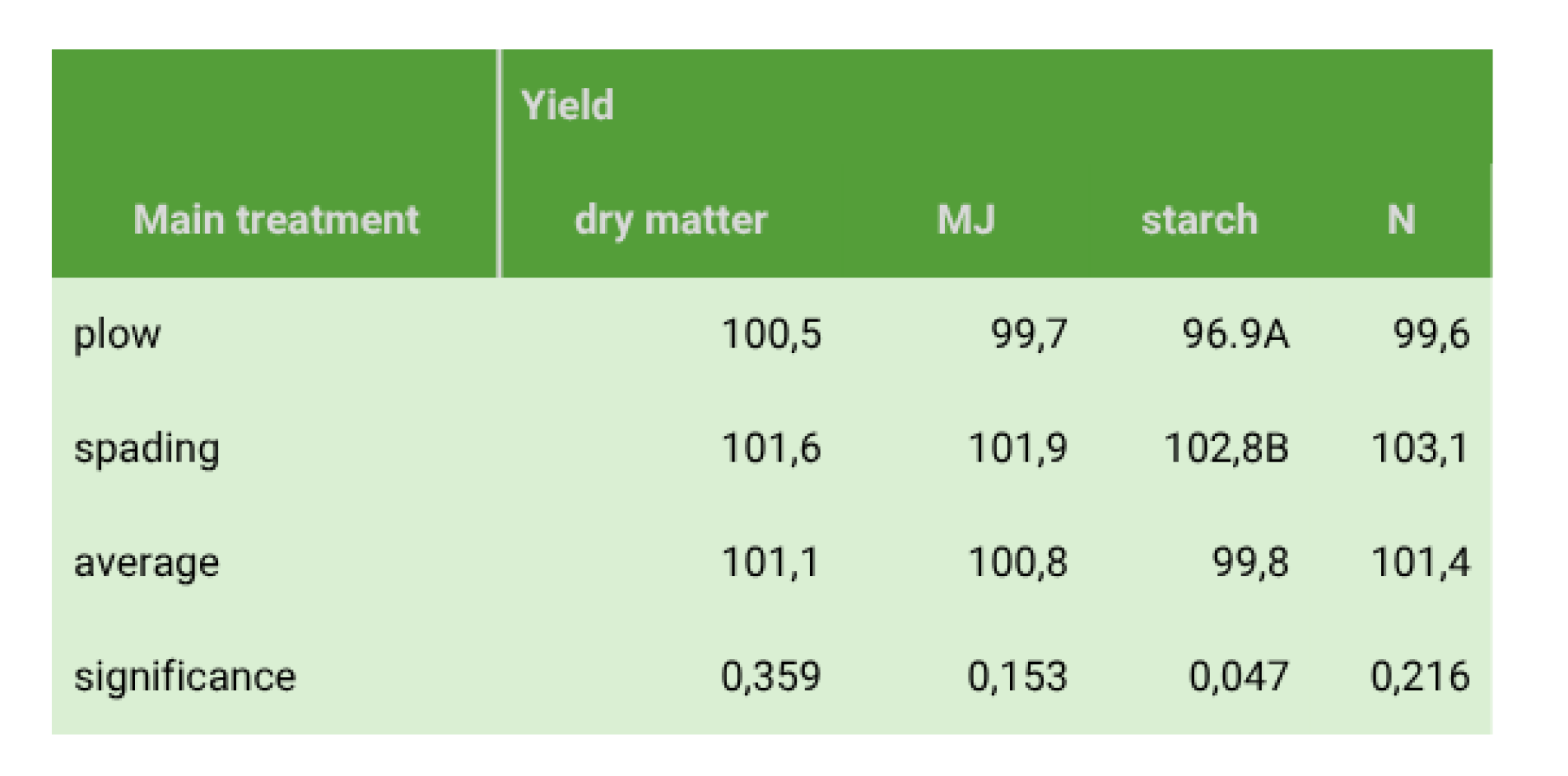
Data from the Grondig Boeren project, which was carried out on loamy soils, shows that the spading machine is superior. However, the difference between the plow and the spading machine is less on drier sandy soils. During the tests, it was noted that there was a solid plow sole under the topsoil, which was broken through to a depth of 42 cm using a front cultivator.
For optimal results, it is essential to work at the right time and with the right settings, regardless of the soil type. In addition, it is important that the spading machine is equipped with a subsoiler or subsoiling tines between the spading blades to work the soil deeply and effectively without excessive mixing of the soil layers. When preparing corn fields, any cover crops or green manure must be taken into account, both when plowing and spading. The impact of correctly reducing and incorporating cover crops should not be underestimated.
Groeikracht has also conducted various tests in this area. It is advisable to reduce the catch crops early and thoroughly. This is because catch crops are grown to retain nutrients during the winter months, which become available as nutrients for the next corn crop in the spring after sufficient reduction. If the catch crops are reduced too late or insufficiently, they extract nitrogen from the soil.
By reducing cover crops early, they actually provide nitrogen for the next crop. This is very important given the current prices of fertilizers. By ‘thorough’ we mean reduction by means of tilling or two operations with a disc harrow. On plots where catch crops were treated late and superficially (one operation with a wing cultivator), a significantly lower yield was measured.
The difference between thorough and shallow cultivation was more than 20% less starch yield. With thorough cultivation, no significant difference was observed between one milling or two treatments with a disc harrow. It is also important to work at the right time and with the right settings when incorporating cover crops. Regardless of the preparation of the green manure, Groeikracht observed a significantly higher starch yield when spading.
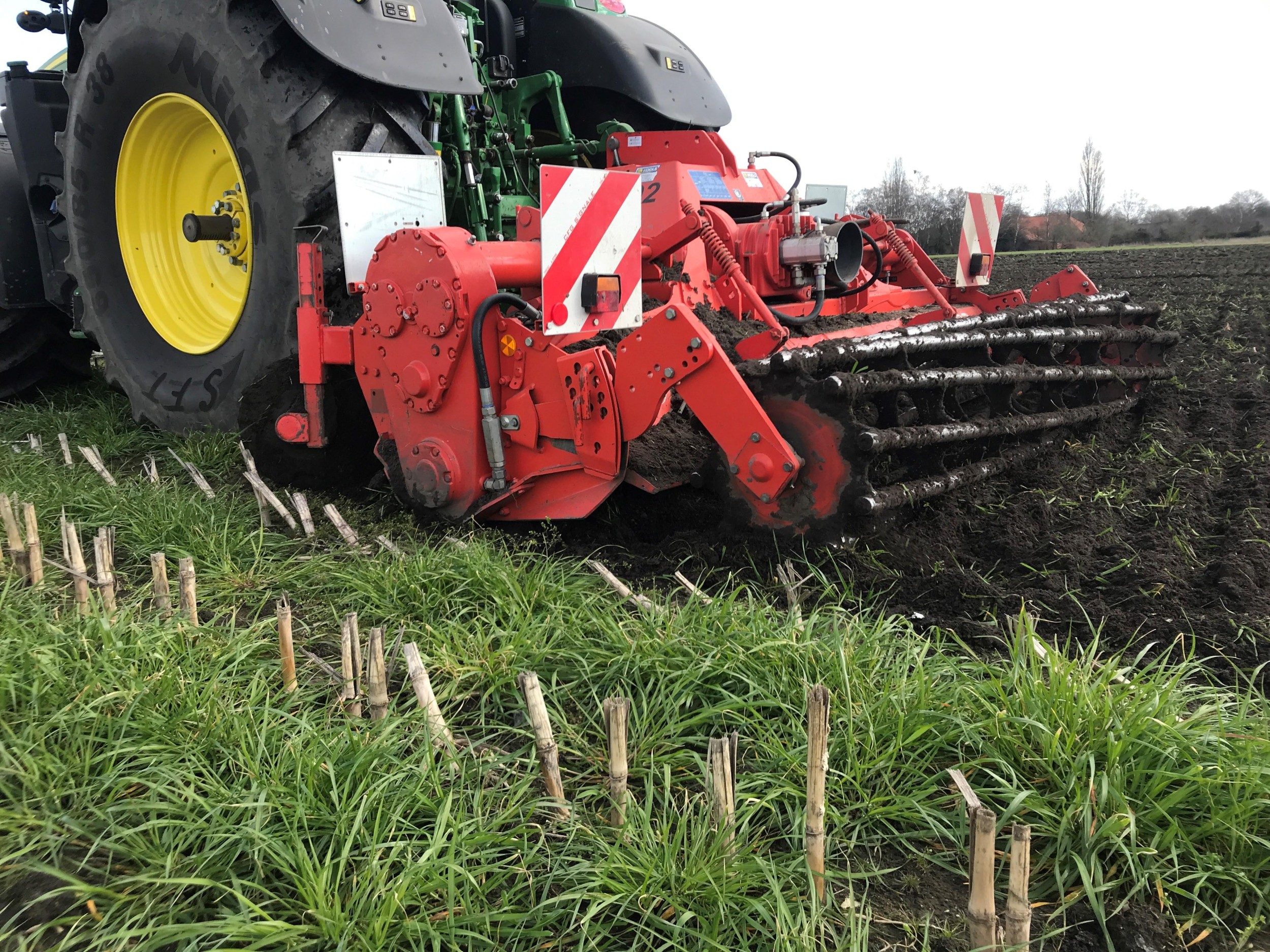
Three types of cover crops were used in the study of their influence: leaf mustard, Italian ryegrass, and tall fescue. Proper reduction of Italian ryegrass requires the most attention. Both single tillage and two treatments with a disc harrow provide suitable preparation, even without the use of glyphosate. Of course, the soil must be suitable for starting preparation at the right time. If Italian ryegrass is not sufficiently reduced before the main soil preparation, plowing has an advantage.
The end result
After four years of practical trials, we have collected a huge amount of data. This data clearly shows that spading is an excellent soil preparation technique for maize cultivation. The spading machine has a clear advantage in terms of strict (starch) yield, especially on (dry) sandy soils. When we also consider the other advantages of the spading machine, the difference with the plow becomes even greater.
The importance of a subsoiler or subsoiler tines between the spading blades is also confirmed in the research. To enable optimal root growth, the soil must be loosened sufficiently deep. Straight, narrow cultivator tines ensure that the soil layers are broken up without being mixed. Finally, it is crucial for both corn cultivation and other crops to carry out the right cultivation at the right time and under the right conditions in order to achieve the best end result. In addition to Groeikracht's practical research, Imants also carried out a thorough technical evaluation. With a comparable tractor, the spading machine can prepare the soil for sowing in a single pass, with a working width of 3 meters. In comparison, a 4-furrow plow with a cutting width of 35 cm only works 1.4 meters of soil per pass, and even with a cutting width of 45 cm, this remains less than 2 meters. In addition, in most cases, the soil still has to be prepared for sowing using a rotary harrow or seedbed preparer. The spading machine therefore not only ensures considerable savings in fuel and labor hours, but also reduces the number of passes and the associated soil compaction. Compared to a 5-furrow plow with a furrow packer, as used in this study, the use of a spading machine results in fuel savings of 35% and time savings of 35%. This results in a cost saving of 35% for soil preparation.
This results in a cost saving of 35% for soil preparation, which can rise to more than 50% if multiple passes are required.
If multiple passes are required, such as an extra operation for seedbed preparation, the savings can even exceed 50%. In addition, there are other advantages of the spading machine, such as optimal mixing of plant residues or manure into the topsoil, faster soil warming, preservation of the soil's capillary action, and avoidance of a plow pan. It is clear that the spading machine is the superior choice.
Contact us for more information
Translated from Dutch.